New Patient Offer: $45 first Exam with Dr. Martin!



Pet Care & Health Blog
Here at Middlesex Veterinary Center, we encourage pet owners to educate themselves on proper pet care and pet health problems by asking questions and finding answers from reliable, trusted sources of information. We are providing our clients access to LifeLearn Client Education library, a unique pet health education library, that strengthens the veterinary team’s role as animal health educators, and provides pet parents with easy-to-understand information.

Lyme Disease in Dogs
By Middlesex Veterinary Center | April 16, 2025
What Is Lyme Disease? Lyme Disease (not Lyme’s Disease) is caused by a spirochete called Borrelia. A spirochete is a type of bacterium. It is transmitted to dogs through the bite of a tick. Once in the blood stream, it is carried to many parts of the body. It is especially likely to localize in joints. It was first thought
Read More

Pyometra in Dogs
By Middlesex Veterinary Center | April 16, 2025
What Is Pyometra? In its simplest terms, pyometra is an infection in the uterus. However, most cases of pyometra are much more difficult to manage than a routine infection. Infection in the lining of the uterus is established as a result of hormonal changes. Following estrus (“heat”), progesterone levels remain elevated for 8-10 weeks and thicken the lining of the
Read More

Rabies in Dogs
By Middlesex Veterinary Center | April 16, 2025
What Is Rabies? Rabies is a disease caused by a virus that attacks the brain. It can affect any warm-blooded animal, including dogs and humans. Although in a few rare cases people have survived rabies after significant intensive care, the disease is almost always fatal. In addition, most states require that animals suspected of having rabies are euthanized due to
Read More

Roundworms in Dogs
By Middlesex Veterinary Center | April 16, 2025
What Are Roundworms? As their name implies, these are worms which have round bodies. On average, they are about 3-5 inches (7-12 cm) long. They live in the dog’s intestines and consume partially digested food. Unlike hookworms, they do not attach to the intestinal wall; rather, they literally swim in their food. Roundworms, sometimes called ascarids, pass moderate numbers of
Read More

Tapeworms in Dogs
By Middlesex Veterinary Center | April 16, 2025
What Are Tapeworms? The most common tapeworm of dogs (and cats) is called Dipylidium caninum. This parasite attaches to the small intestinal wall by hook-like mouthparts. Adult tapeworms may reach 8 inches (20 cm) in length. The adult worm is actually made up of many small segments about 1/8 inch (3 mm) long. As the tail end of the worm
Read More

Tartar on Dogs Teeth & Prevention
By Middlesex Veterinary Center | April 16, 2025
How Does Tartar Form, And What Does It Do? Plaque is a gummy substance that forms on the teeth within a few hours after a meal. Within 24 hours, plaque hardens into tartar. Tartar is harmful in two ways. First, it serves as a place where bacteria can reside and multiply in the mouth. There is substantial scientific evidence that
Read More
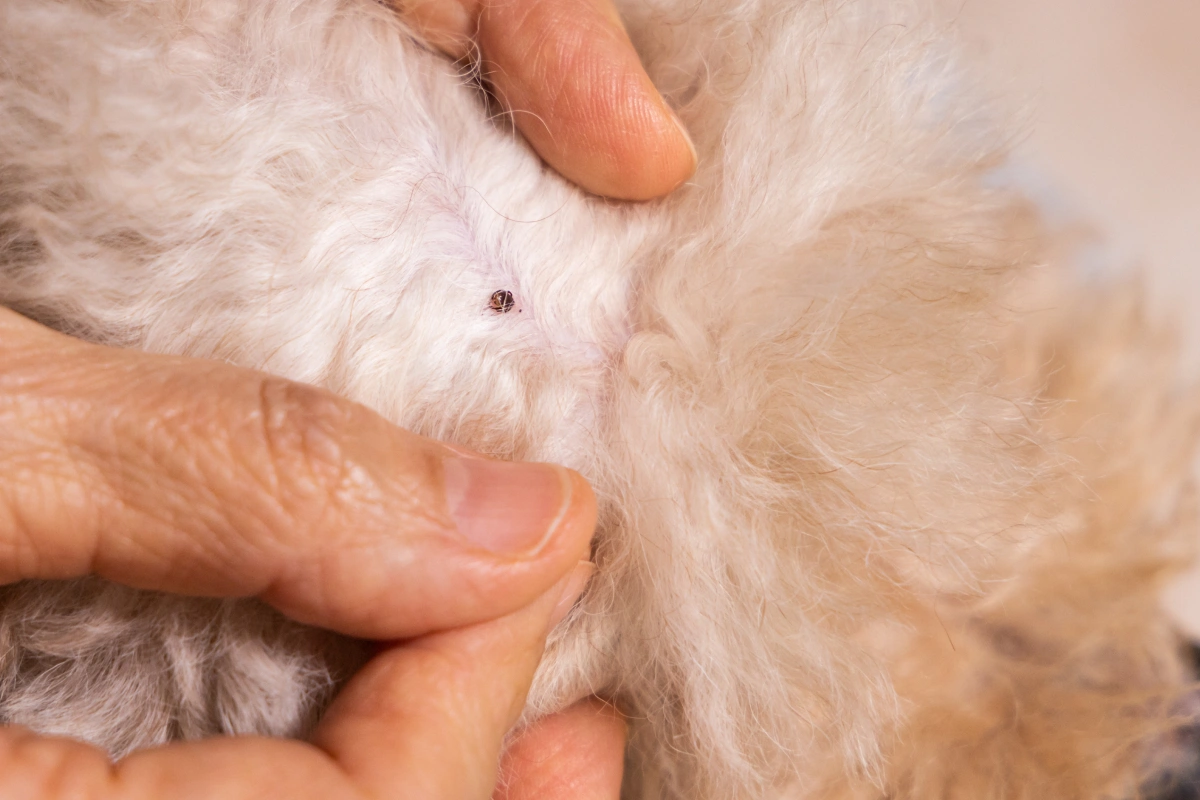
Ticks: Myths vs. Facts
By Middlesex Veterinary Center | April 16, 2025
What Are Ticks? Disease-carrying ticks pose health risks to dogs and people, no|matter where you live. The U.S. Centers for Disease Control (CDC) reports that ticks in every U.S. state carry diseases, and the number of tick-borne diseases is increasing. But do you know the myths and facts about ticks? Here, DogsAndTicks.com debunks some of the most commonly believed myths about ticks
Read More

What is a Dog Ultrasound
By Middlesex Veterinary Center | April 16, 2025
What Is An Ultrasound? Your dog has been scheduled for an ultrasound examination. The purpose of this procedure is to aid in making a diagnosis of the disease which has been causing your pet to be ill. What is an ultrasound machine? An ultrasound machine emits ultrasound waves that penetrate into your dog’s organs. They are reflected back into the
Read More

Whipworms in Dogs
By Middlesex Veterinary Center | April 16, 2025
What Are Whipworms? Whipworms are intestinal parasites which are about 1/4 inch (6 mm) long. They live in the cecum and colon of dogs where they cause severe irritation to the lining of those organs. This results in watery, bloody diarrhea, weight loss, and general debilitation. They are one of the most pathogenic worms found in dogs. How did my
Read More

Tips for Flying With a Cat
By Middlesex Veterinary Center | April 16, 2025
Travelling With Your Cat? I’m planning to travel and would like to take my cat with me. What are some of the factors I need to consider before taking my cat on an airplane? Having your cat along may add enjoyment to your trip. It’s important to keep your cat’s health and safety in mind when traveling, so be sure
Read More