New Patient Offer: $45 first Exam with Dr. Martin!




Professional Dental Services for Pets
As pet owners, we want to ensure that our pets are healthy and happy. However, one aspect of pet care that is often overlooked is dental care. Just like humans, pets can develop dental problems that can lead to serious health issues if left untreated. Learn why pet dental care is important, the process of dental cleaning, and the signs and symptoms of dental disease to look out for.
Why Pet Dental Care is Important
Many pet owners may not realize the importance of dental care for their pets. However, just like humans, pets can develop plaque and tartar buildup on their teeth, which can lead to dental disease. This can cause pain, and difficulty eating, and even lead to more serious health issues such as heart and kidney disease. By regularly caring for your pet’s teeth, you can prevent these issues and ensure that your pet stays healthy and happy.
Pet Dental Cleaning Process & What to Expect
Before the dental cleaning, we will perform a thorough examination of your pet’s mouth to check for any signs of dental disease. If necessary, we may also take x-rays to get a better look at your pet’s teeth and gums. The dental cleaning itself involves removing plaque and tartar buildup from your pet’s teeth, both above and below the gum line. This is done using an ultrasonic scaler and high-speed polisher to ensure that your pet’s teeth are thoroughly cleaned. The procedure is done under anesthesia to ensure your pet’s safety and comfort.
We recommend blood work prior to the dental procedure to ensure the safest and most ideal anesthetic regimen for your pet. During the cleaning, your pet will be under anesthesia, so they will not feel any pain or discomfort. After the cleaning, your pet may experience some mild discomfort and may need to eat soft food for a few days. We may also prescribe pain medication or antibiotics if necessary. It is important to follow our post-operative instructions for post-cleaning care to ensure that your pet heals properly.
* We will refer patients to a veterinary dentist for advanced periodontal care, root canals, and other more involved procedures.
Signs & Symptoms of Dental Disease
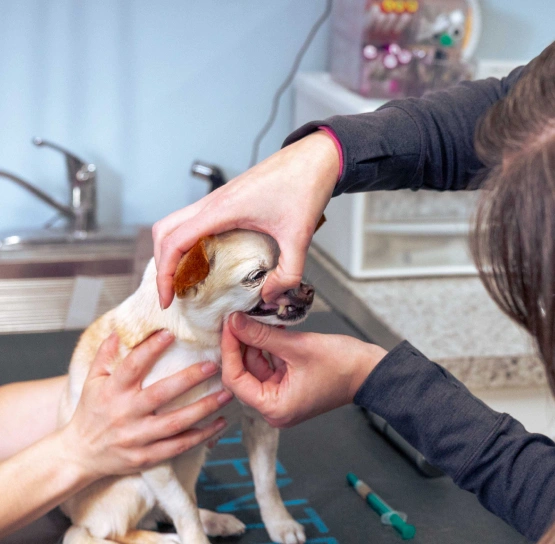
It is important to regularly check your pet’s mouth for any signs of dental disease. Some common signs and symptoms include:
- Halitosis (Bad breath)
- Red swollen gums or any bleeding from the mouth
- Difficulty eating
- Changes in eating habits or behavior or a reluctance to eat
- Loose or missing teeth
- Drooling or dropping food from the mouth
- Refusal to play with toys
- Sneezing, nasal discharge, or excessive salivation.
- Facial swelling
If you notice any of these signs, it is important to schedule a dental cleaning with us as soon as possible. Regular dental cleanings can prevent these issues from developing and keep your pet’s mouth healthy.
At-home Dental Care
Regular at-home dental care can save you money in the long run. By preventing dental issues, you can avoid costly procedures such as tooth extractions, root canals, and other treatments that may require anesthesia and hospitalization.
6 Essential Tips for at-home Pet Dental Care
Below are 6 essential tips to help you maintain your pet’s dental wellness.
1. Brush Your Pet’s Teeth Regularly
Just like humans, pets need their teeth brushed regularly to remove plaque and tartar buildup. Use a pet-specific toothbrush and toothpaste to gently brush your pet’s teeth. Start slowly and gradually increase the duration and frequency of brushing to get your pet used to the process. Aim to brush your pet’s teeth at least 2-3 times a week.
2. Provide Dental Chews and Toys
Dental chews and toys can help remove plaque and tartar buildup while also providing entertainment for your pet. Look for products that are specifically designed for dental hygiene and avoid giving your pet hard objects that can damage their teeth.
3. Add Dental Supplements to Their Diet
There are many dental supplements available for pets that can help maintain their dental health. These supplements often contain enzymes that can break down plaque and tartar, promoting healthy teeth and gums. Consult with us to find the best supplement for your pet.
4. Regularly Inspect Your Pet’s Mouth
Make it a habit to regularly inspect your pet’s mouth for any signs of dental issues. Look for red or swollen gums, bad breath, loose or broken teeth, and any other abnormalities. If you notice any issues, consult with us for proper treatment.
5. Schedule Regular Dental Check-Ups
Just like humans, pets need regular dental check-ups to maintain their dental wellness. Schedule a dental exam with us at least once a year to ensure that your pet’s teeth and gums are healthy. We may also recommend professional dental cleanings if necessary.
6. Practice Good Dental Hygiene Habits
As a pet owner, it’s important to practice good dental hygiene habits yourself. Avoid sharing utensils or food with your pet, as this can transfer bacteria from your mouth to theirs. Additionally, avoid giving your pet sugary treats and snacks, as these can contribute to plaque and tartar buildup.