New Patient Offer: $45 first Exam with Dr. Martin!



Creating a Low-Stress Toothbrushing Routine for Your Cat
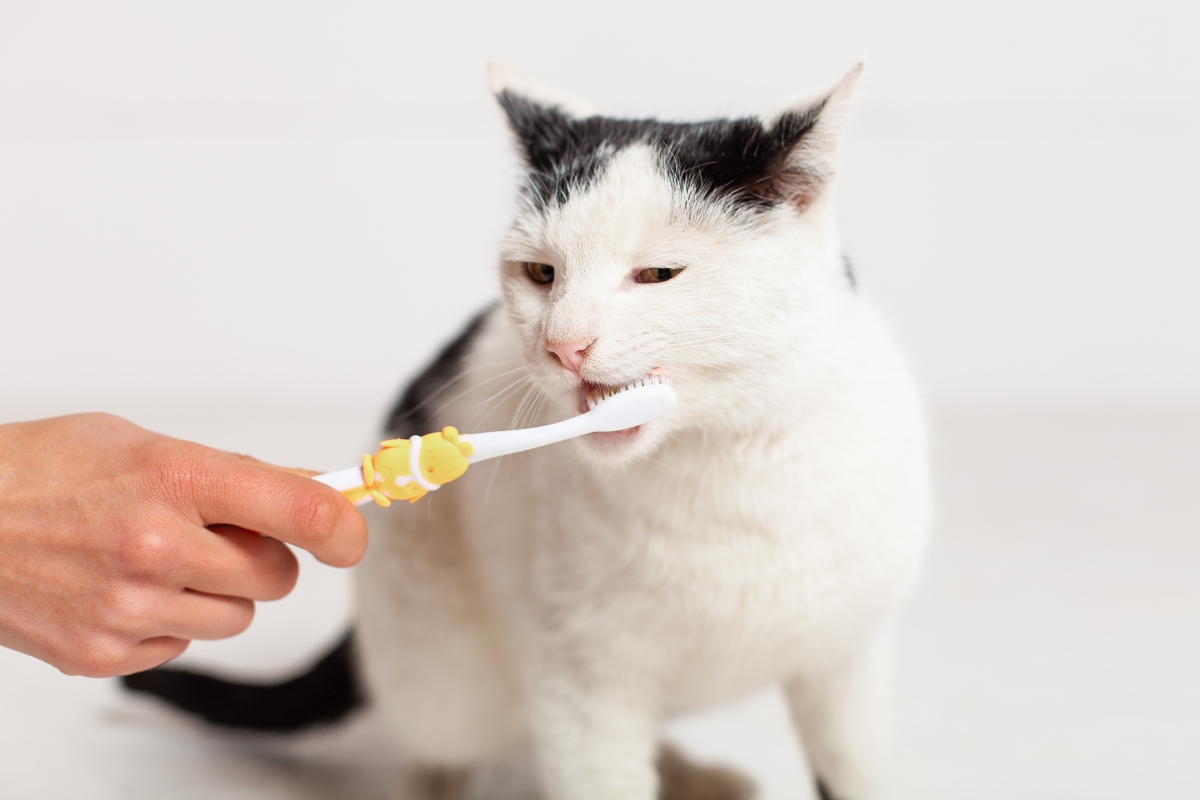
A healthy mouth is an important part of your cat’s overall wellness, yet toothbrushing can seem challenging when your cat dislikes having its face or mouth handled. Fortunately, you do not need to turn dental care into a daily struggle. With patience, positive reinforcement, and a gradual approach, many cats can learn to accept a consistent toothbrushing routine.
Cats often hide signs of discomfort, so maintaining good oral hygiene can help you notice changes before they become more difficult to manage. Cat dental care works best when home brushing is combined with regular veterinary examinations and professional dental treatment when needed. The goal is not to brush perfectly on the first attempt, but to create a routine your cat can tolerate comfortably.
Why Regular Toothbrushing Matters for Cats
Plaque can accumulate on a cat’s teeth after eating. If plaque remains on the tooth surface, it can harden into tartar and contribute to gum inflammation. Over time, dental disease may cause discomfort, bad breath, difficulty eating, and other changes in behavior.
Watch for signs that may indicate an oral health problem, including:
- Persistent bad breath
- Red or swollen gums
- Bleeding around the gums
- Excessive drooling
- Pawing at the mouth
- Difficulty chewing
- Dropping food
- Reduced appetite
- Loose or damaged teeth
If you notice these symptoms, have your cat examined rather than relying solely on home brushing.
Start When Your Cat Is Relaxed
Timing can make a major difference. Choose a quiet period when your cat is calm and less likely to become distracted.
Avoid starting immediately after a stressful event or when your cat is highly active. Instead, choose a familiar location where your cat already feels comfortable.
Begin by simply sitting near your cat and offering gentle affection. The first goal is to create a positive environment rather than immediately reaching for a toothbrush.
Step 1: Get Your Cat Comfortable With Face Handling
Before introducing toothpaste or a toothbrush, teach your cat that gentle facial contact is safe.
Stroke the cheeks, chin, and sides of the face for a few seconds. If your cat remains relaxed, offer praise or a small appropriate treat.
Repeat this process during several short sessions. Gradually work toward gently lifting the lip for a moment so you can see the teeth.
Do not force the mouth open. If your cat pulls away, flattens its ears, swishes its tail rapidly, or becomes tense, stop and try again later.
Step 2: Introduce Cat-Safe Toothpaste
Once your cat accepts facial handling, introduce toothpaste made specifically for cats.
Never use human toothpaste. Cats generally swallow toothpaste instead of rinsing and spitting it out, and certain ingredients in human toothpaste can be unsafe for pets.
Place a tiny amount of cat-safe toothpaste on your fingertip and let your cat smell or taste it. Continue this step until your cat accepts the flavor comfortably.
You do not need to begin brushing immediately. Familiarity can make the transition much easier.
Step 3: Practice With Your Finger
After your cat accepts the toothpaste, gently rub your finger along the outside surfaces of a few teeth.
Focus near the gumline, where plaque commonly accumulates. Keep the first attempts extremely short.
If your cat remains calm, gradually increase the number of teeth you touch during each session. Reward cooperation afterward.
This step helps your cat become familiar with the sensation before you introduce a toothbrush.
Step 4: Introduce a Soft Toothbrush
When your cat comfortably accepts finger brushing, introduce a soft toothbrush designed for cats.
Allow your cat to inspect and smell the toothbrush first. You can place a small amount of cat-safe toothpaste on the bristles to create a familiar association.
Next, gently touch the brush to the outer surfaces of the teeth. Once your cat accepts this, use small, gentle movements.
You do not have to brush every tooth during the first few sessions. Gradual progress is more valuable than forcing your cat to complete a long session.
Keep Toothbrushing Sessions Short
A short routine can be easier for both you and your cat.
A gradual training sequence may look like this:
- Touch the cheeks and chin.
- Briefly lift the lip.
- Introduce cat-safe toothpaste.
- Rub the teeth with a finger.
- Introduce the toothbrush.
- Increase brushing time gradually.
If your cat becomes stressed at any point, return to the previous step that it tolerated well.
Use Positive Reinforcement
Positive reinforcement can help your cat associate toothbrushing with something rewarding.
After a successful session, offer praise, affection, or a suitable treat. Keep your voice calm and avoid sudden movements.
Never punish, yell at, or forcibly restrain your cat as part of the training process. These responses can increase fear and make future brushing more difficult.
How Often Should You Brush Your Cat’s Teeth?
Daily brushing is generally considered the ideal routine for helping control plaque. However, cats that are new to toothbrushing may need time to reach this frequency.
Start with brief sessions and gradually increase consistency. If your cat initially tolerates brushing only a few times per week, continue working toward a more regular routine.
Consistency and comfort should remain the priorities.
When Toothbrushing Is Not Enough
Brushing can help control plaque, but it cannot remove established tartar or treat dental disease beneath the gumline. Cats may also develop painful oral conditions that are difficult to identify at home.
Regular veterinary examinations can help identify problems that require professional dental care. Your veterinarian may recommend a professional cleaning, dental X-rays, or other treatment depending on your cat’s oral health.
For local pet owners, Middlesex Veterinary Center can evaluate your cat’s dental health and provide guidance on developing an appropriate home toothbrushing routine.
Tips for a More Comfortable Routine
Keep these practical tips in mind:
- Choose a quiet location.
- Brush when your cat is relaxed.
- Use only cat-specific dental products.
- Keep sessions brief.
- Reward calm cooperation.
- Introduce changes gradually.
- Never force your cat to continue when it becomes distressed.
- Replace the toothbrush when the bristles become worn.
Every cat has a different personality. Some adjust quickly, while others need several weeks of gradual practice.
Creating a low-stress toothbrushing routine requires patience rather than force. Start with trust and gentle handling, introduce cat-safe toothpaste gradually, and then progress to finger brushing and a soft toothbrush. Keep sessions short and reward calm cooperation.
Home brushing is an important preventive habit, but it should complement professional dental examinations. Early attention to oral health can help support your cat’s comfort and quality of life.
Schedule your appointment with Middlesex Veterinary Center to discuss your cat’s dental health and learn how to establish an effective home oral hygiene routine.
Frequently Asked Questions
Q1. How can I make toothbrushing less stressful for my cat?
Ans: Start slowly and introduce one step at a time. Begin with gentle facial handling, then introduce cat-safe toothpaste, finger brushing, and finally a soft toothbrush. Reward calm behavior throughout the process.
Q2. How often should I brush my cat’s teeth?
Ans: Daily brushing is generally ideal for controlling plaque. However, gradually build toward daily brushing if your cat is unfamiliar with the routine.
Q3. Can I use human toothpaste for my cat?
Ans: No. Use toothpaste specifically formulated for cats. Human toothpaste may contain ingredients that are unsafe for cats when swallowed.
Q4. What should I do if my cat refuses the toothbrush?
Ans: Stop the session and return to a step your cat already accepts. Gradually reintroduce the toothbrush instead of forcing the process. Your veterinarian can also recommend alternative dental hygiene options.
Q5. Can brushing remove tartar from my cat’s teeth?
Ans: Brushing helps control plaque but cannot effectively remove established tartar. Professional dental treatment may be necessary when tartar has already formed.
Q6. When should I take my cat for a dental examination?
Ans: Schedule an examination if your cat develops persistent bad breath, red or bleeding gums, drooling, difficulty eating, reduced appetite, loose teeth, or other changes involving the mouth. Routine dental assessments are also important even when your cat appears healthy.